Updated 12.02.25
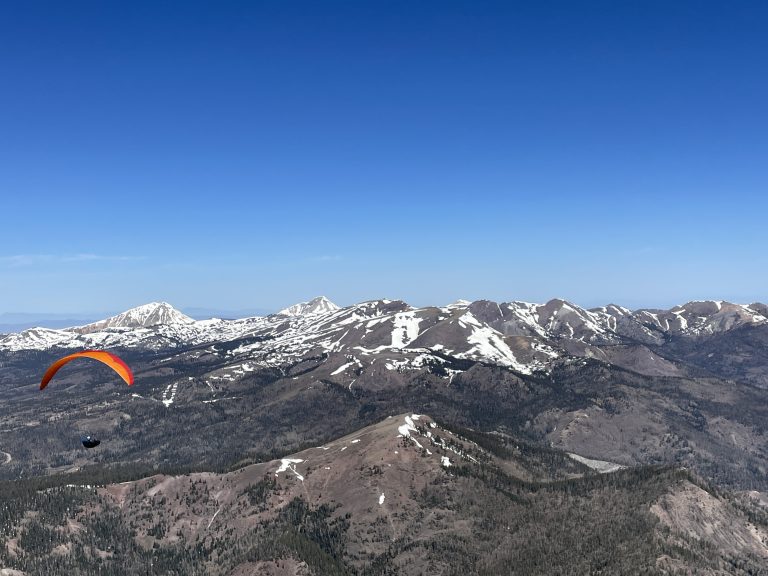
Junction is a great early morning thermal site located at the base of the Tushar Mountains. As an East facing launch, thermals begin early and allow for gentle morning soaring or an early start to an epic XC flight. Usually only flown by a handful of pilots at a time but has seen over 100 pilots circling together taking in the views of the Tushars during competition days.
Facing East, the Junction Launch often begins to produce anabatic flow and can produce strong thermals early in the morning. Be very diligent about forecasting weather to fly here as it is in the lee of the predominant West flow. Don’t be “fooled” by thermals and anabatic flow, thinking it is the predominant wind. This can happen before peak heating when the sun hits the east face in the morning, fueling thermals and anabatic flow so that it appears that it is safe to fly. However, the winds above the peak are 99% of the time over the back from the west, so when peak heating starts, the westerlies will mix down and overpower the morning east wind, creating extreme and unmanageable leeside turbulence. Consult a local on the Telegram chat if you are unsure of the day’s forecast.
High altitude general flying information can be found HERE.
Quick Info
- General Site Guidelines HERE
- High Altitude Launch at 8100 ft means low air density and can require an aggressive, controlled torpedo. You must be able to run through the entirety of your launch.
- Supplemental oxygen recommended if pilot plans to fly above 12k ft. Pilots coming from sea level are recommended to use supplemental oxygen at all times. If you become short of breath, confused, or dizzy, IMMEDIATELY seek to safely descend and end your flight. If you are able, radio your position so other pilots can ensure you land safely.
- H3/P3 Required
- Skills needed but not limited to high wind launching, high wind kiting, no wind launching, active piloting in turbulence, high altitude launching, high altitude landing, descent techniques, thermalling, and ridge soaring
- Wind Direction: Ideal 80-105, OK 65-105
- Wind Speeds: H3, Min 8, Ideal 12, Max 20, gusts to 5 P3, Min 0, Ideal 6, Max 12, gusts to 5
- Min Glide Ratio, 1.3
- Membership in USHPA and CUASA. CUASA membership form HERE
Launch
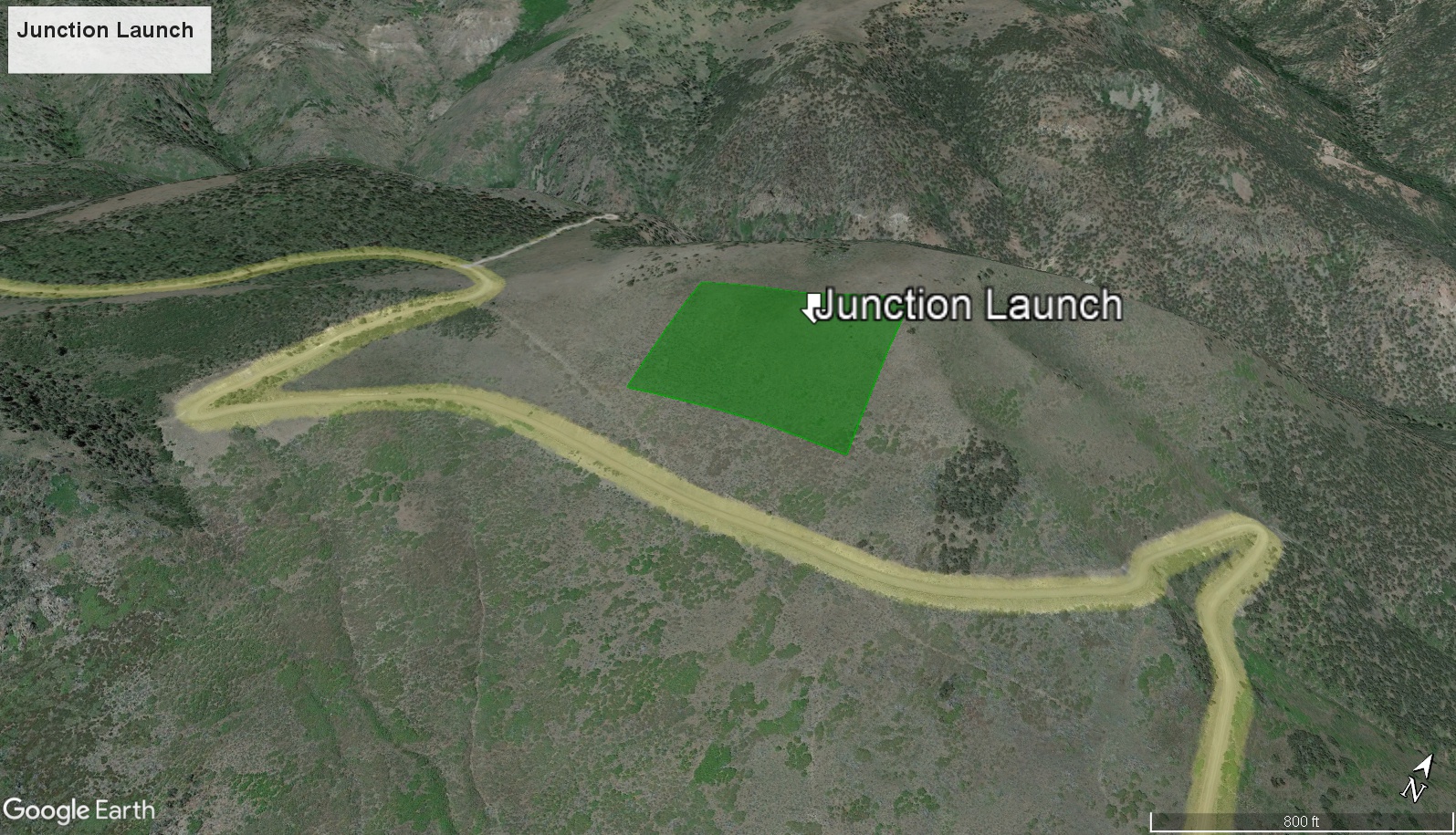
Please park by the Forest Service sign taking care not to block the road. From the sign, it is a short walk along a game trail to the launch area.
Launch is a little overgrown and has quite a few snag hazards, but there are a couple of more optimal spots to lay out a glider. Teams of pilots have put in work to clear and smooth out the area and is a continual effort. Search around for the best option. A tarp can be very handy to protect lines from snags.
Be vigilant when launching to avoid the bushes to the south of launch. There have been close calls with these bushes.
Flying
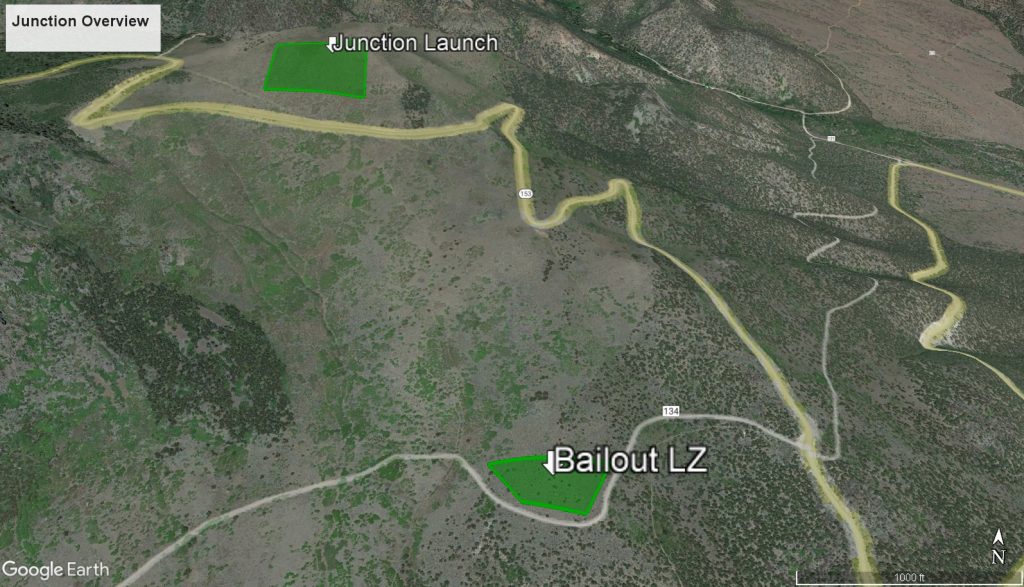
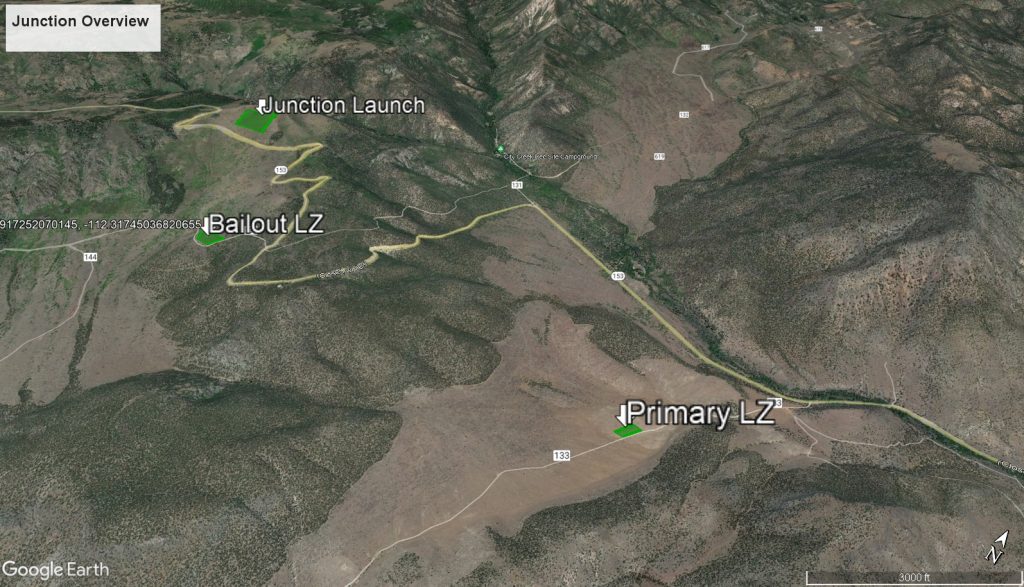
Whenever Junction is flyable, it is likely to turn on early, sometimes as early as 9am, due to it being an east-facing site. It is best to search for thermals on the east and south east facing terrain before benching up to search for thermals along the higher terrain or cliffs behind launch. The bailout LZ should be used by any pilots who are not intending on flying cross country. If a pilot intends on flying cross country, the pilot should fly to at least 10k feet to be able to safely cross the foothills opposite launch into the wide expansive Sanpete Valley. Pilots should be prepared for long walks and no cell service should they land out in this valley, and locals highly recommend flying with a few liters of water and a GPS tracker to be safe.
Landing Zone
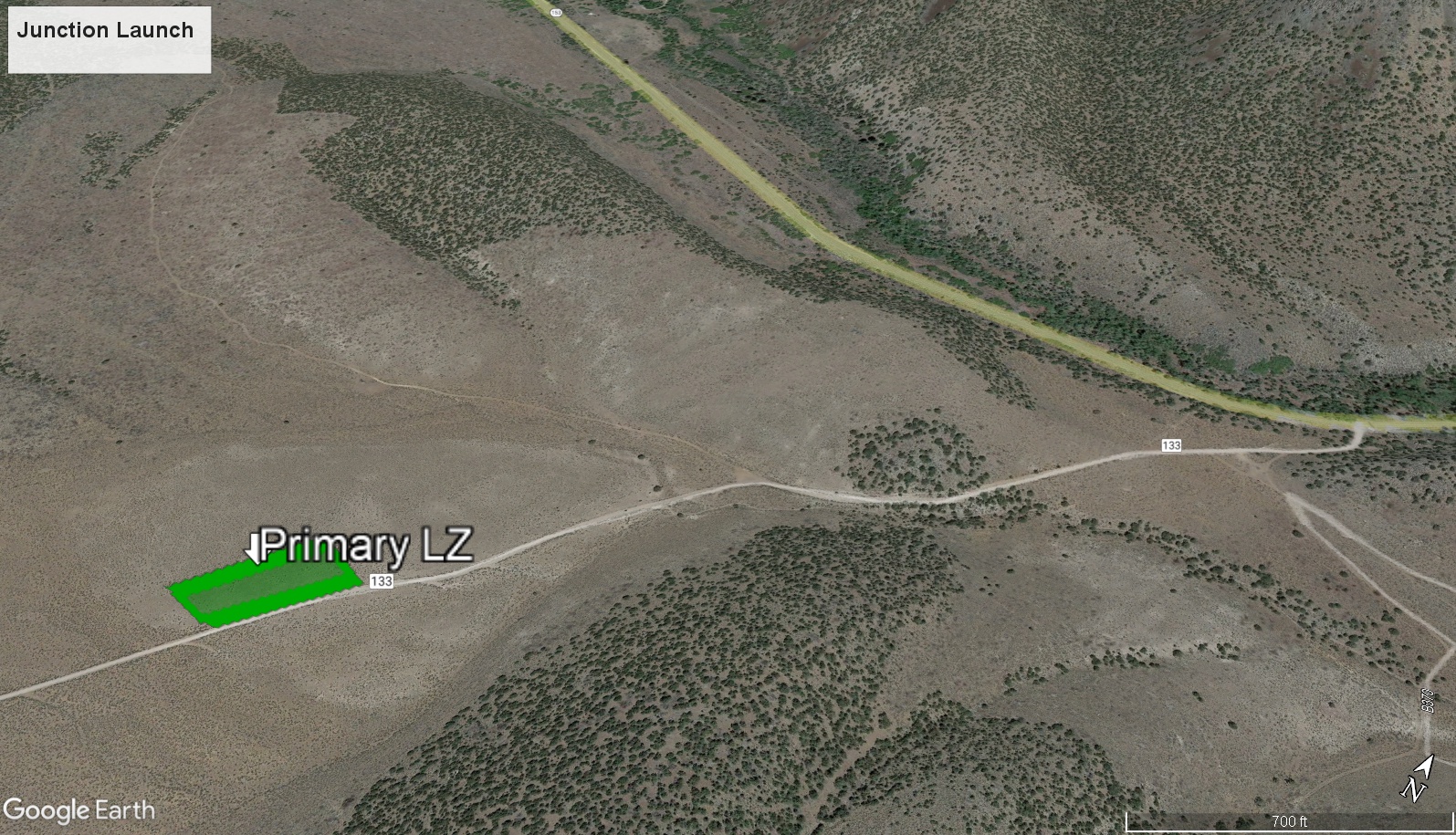
Welcome to landing in the Wild West. Sage bush and tumbleweeds abound, but landing options are plenty. You just may need to spend a little time picking your lines out of the weeds. It is a good idea to scope out the landing zone and Bailout LZ to note any rocks or undulations that may be encountered.
Bailout LZ Coordinates:
38.24917252070145, -112.31745036820655